Heat pump design & installation
Whole-house and room-by-room systems, ducted or ductless, designed around a load calculation and the condition of your ducts. One efficient system for both heating and cooling.
The Big Chill Heating & Cooling
We convert homes around Princeton and central New Jersey from fossil fuels to air-source heat pumps, and we repair and maintain all HVAC systems. Our team has spent years making houses tighter first, so we can tell you when a heat pump makes sense and when it doesn’t.
A division of Tay River Builders
Call (609) 279-0722, Monday to Friday, 8 am to 5 pm, or book a service call online and pick a time.
Smell gas? Leave the house first, then call PSE&G at 1-800-880-7734 or 911.
What we do
Most HVAC companies only see the box in the basement. We see the whole house it’s trying to heat.
Whole-house and room-by-room systems, ducted or ductless, designed around a load calculation and the condition of your ducts. One efficient system for both heating and cooling.
Furnaces, boilers, central air and heat pumps. Diagnosis that starts with measurements, and maintenance that keeps equipment running safely and efficiently.
Fresh-air ventilation for tighter houses, and duct and return fixes for the rooms that are always too hot or too cold.
What “ethical” means here
We choose equipment from a proper load calculation for your house instead of a rule of thumb or a square-footage chart.
If sealing the attic or fixing the ducts will solve the problem for less than new equipment, we’ll tell you, and we can do that work too.
Static pressure, airflow and room temperatures before and after. You see the numbers we see.
If your system has good years left, we’ll say so. If something is unsafe, we’ll say that too.
Heat pumps run on electricity, so a well-designed system gets cleaner as the grid does. Whether your bills drop depends on your house and what you burn now, so we run your numbers before you decide.
Why heat pumps
A furnace burns fuel to make heat. A heat pump moves heat that’s already there: out of the outdoor air in winter, out of your house in summer. That’s why it can deliver several units of heat for every unit of electricity it uses.
How paying for it works
Your electric utility decides most of this, so that’s the first thing to know. These are the published programs as of November 2026. They change, and they have rules, so treat this as a map and not a promise.
PSE&G customers can repay the balance on their monthly bill at 0% interest, with no credit check, if they have 12 months of on-time payments. The limits are up to $25,000 on a regular HVAC project and up to $50,000 on a decarbonization project, usually over 84 months. The contractor applies before work starts.
The math, with round numbers: a $24,000 system earns a $10,000 rebate, because $10,000 is less than half of $24,000. The remaining $14,000 over 84 months is about $167 a month. That’s arithmetic, not a quote.
On one recent Princeton job, the homeowner saved over $10,000 through the program and is repaying the rest on the bill over seven years. That’s one job. Your number depends on your house.
Holding a few quotes?
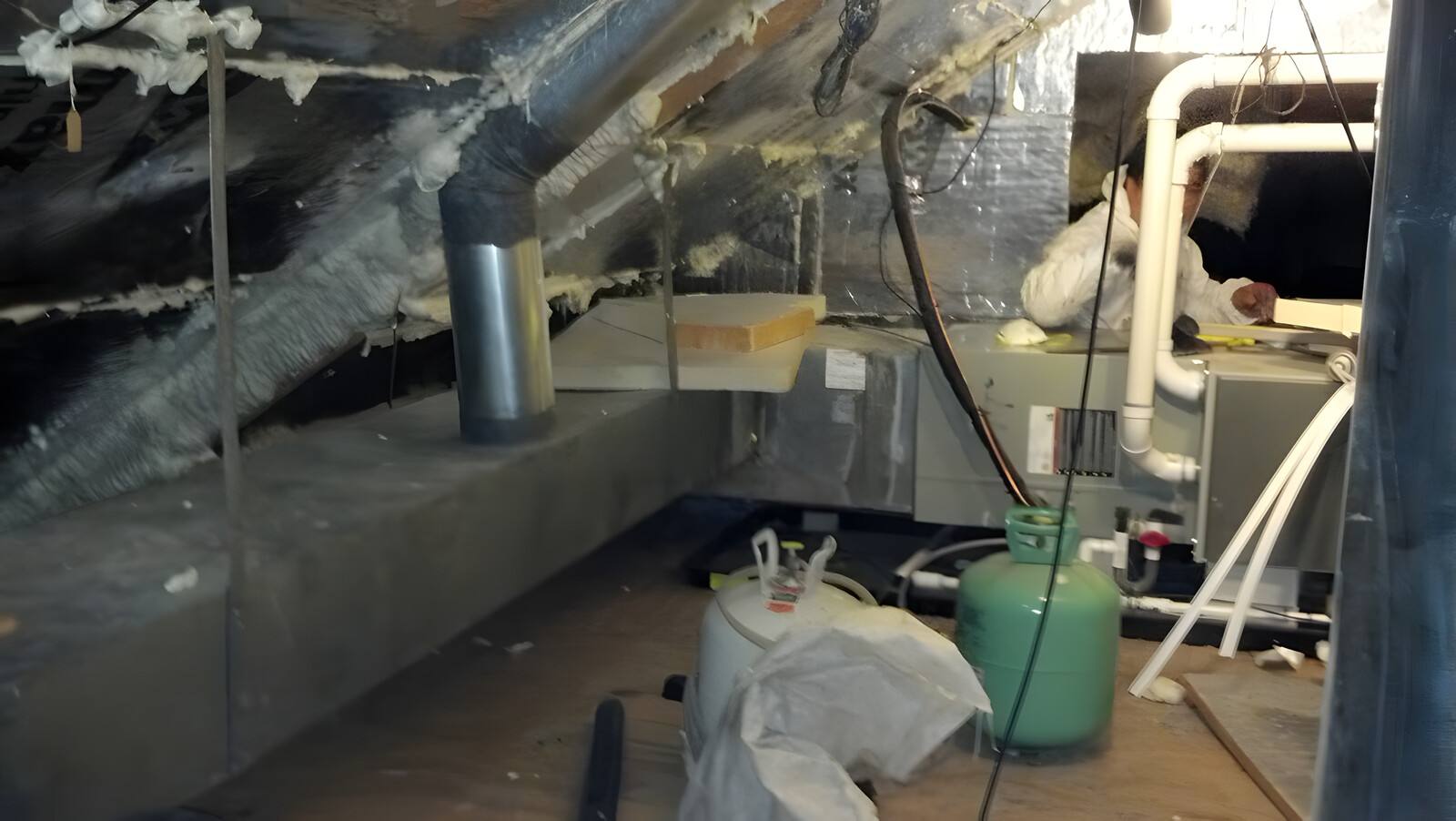
The price is the easy part. Jesse wrote about the hard part in Asterisk: most of what makes a system work happens where you can’t see it, so ask for evidence. We’d want you to ask us all of these too.
Got a quote you’re unsure about? Tell us what’s in it“Not only are we enjoying lower utility bills, we are more comfortable in our home after Tay River’s work. Jesse was very receptive to our questions, and took time to explain everything.”
From the field notes
Why are second-floor rooms hot in summer? Usually because not enough cold air reaches them, not because they lack a “hot air return.” Jesse’s case for testing the hypothesis before spending a dime.
Read the noteQuestions
Modern cold-climate heat pumps are built to keep heating well below freezing. Whether one is right for your house depends on how much heat it loses, which is exactly what we calculate. Tightening the house first makes the answer easier and the system smaller.
Not necessarily. Heat pumps come in ducted and ductless versions. If you have ducts, we’ll test whether they’re up to the job; if you don’t, a ductless or compact ducted system can work well.
Yes. We repair and maintain all kinds of HVAC systems, not just heat pumps.
We’ll service almost anything, but we’re fussy about what we install. Our go-to equipment is Mitsubishi’s Hyper-Heat line and Daikin’s Aurora line.
Yes, and we plan the two together. The Big Chill is a division of Tay River Builders, whose crews have been air sealing and insulating homes since the late 2000s, with more than 2,000 energy retrofits behind them.
Often. See how paying for it works for what PSE&G and JCP&L offer. Programs change often, so we’ll check what applies to your house when we put together a proposal.
No. The federal credits for heat pumps ended for equipment installed after 2025. Plenty of websites still mention them. If you had a credit from an earlier year, ask your accountant whether any of it carries forward.
We work Monday to Friday, 8 am to 5 pm. Call (609) 279-0722, or book online and pick a time. If you smell gas, leave the house first, then call PSE&G at 1-800-880-7734 or 911.
Start a project
Start with a conversation and a look at your house. We'll tell you what size system you actually need, what to fix first, and what it will cost to run.